


Annual security training has a consistent flaw: employees complete the session, pass the quiz, and forget most of it within days. The issue isn’t motivation. It’s that the format works against how the brain actually learns. One session per year doesn’t build lasting habits, and for organizations facing real threats daily, that gap is costly.
Key Takeaways
- Microlearning delivers short, focused lessons that fit into the workday without disrupting productivity.
- Spaced repetition reinforces security concepts over time, which is how long-term memory actually forms.
- Employees who receive consistent micro-lessons are better prepared to spot phishing, suspicious calls, and social engineering tactics.
- Criminals often combine phone calls and emails to make attacks more convincing and harder to detect.
- Gamified microlearning platforms use rewards and real-time tracking to keep employees engaged and accountable.
The Problem With Once-a-Year Training
Most security training programs follow a predictable cycle. There’s a long video or slide deck, a short quiz, and then nothing for another twelve months. The content is dense, delivered in bulk, and rarely revisited after the session ends. By the time an employee faces a real threat, the training feels like a distant memory.
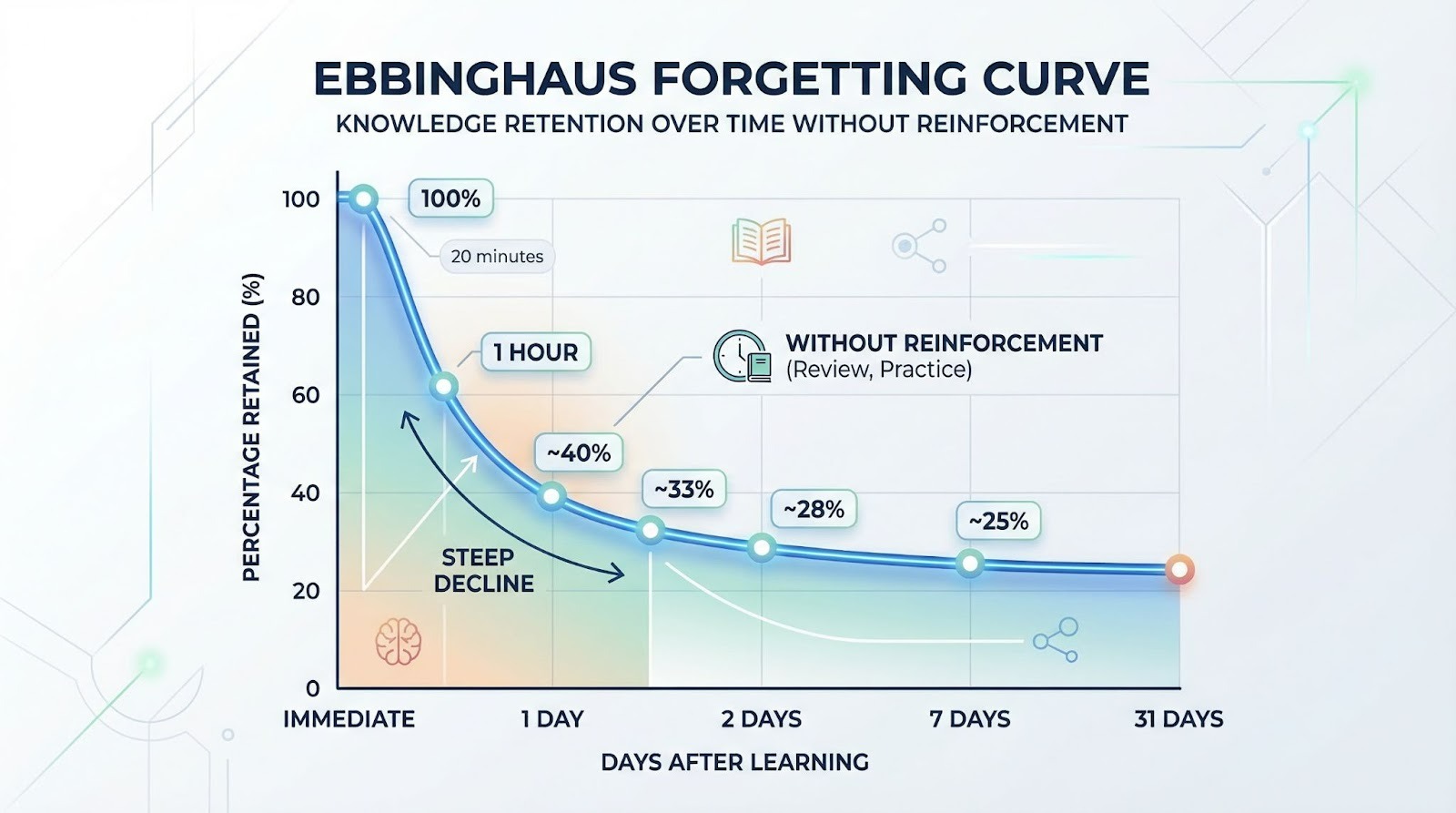
Research consistently shows that people forget a large portion of new information within 24 hours without reinforcement. Annual programs don’t account for this, which is exactly why so many employees still click suspicious links or hand over credentials even after completing required training. The problem isn’t the content, it’s the delivery.
Why Traditional Cybersecurity Training Fails — and How to Fix It
How Microlearning Works With the Brain, Not Against It
Microlearning breaks training into short, focused lessons employees can complete in a few minutes. Instead of one dense session, information arrives in consistent increments that support how memory naturally forms. Each lesson builds on the last, creating a foundation that gets stronger over time rather than fading after a single exposure.
The concept of spaced repetition is central to why this approach works. When the brain encounters information at regular intervals, it reinforces the neural connections tied to that knowledge. It’s the difference between cramming the night before a test and actually remembering the material weeks later. For security training, that difference is the whole point.
Good knowledge retention doesn’t happen by accident. It requires repetition, context, and timing. Microlearning provides all three in a format that fits the workday, without asking employees to set aside hours or disrupt their schedule.
Criminals Don’t Stick to One Channel
One thing traditional training often overlooks is how attacks actually happen in practice. Most employees know to watch for suspicious emails, but real attacks rarely use a single channel. Criminals frequently run a multi-pronged approach, pairing a phone call with an email to manufacture urgency and a convincing sense of legitimacy.
Here’s how it works: an employee gets an email that looks like it came from IT, a vendor, or a financial institution. Shortly after, a caller references that email and applies pressure, asking for login credentials or system access. The combination is far more convincing than either tactic alone, and it closely mimics how legitimate communications work.
Employees trained only on email phishing are less prepared for this kind of coordinated attempt. Microlearning makes it practical to cover multiple threat types through short, separate lessons. Regular micro-sessions on voice phishing, business email compromise, and credential theft give employees a much more complete picture of the threats they’re likely to face.
Why Microlearning Is the Future of Cybersecurity Training
The Numbers Behind the Approach
Studies have found that microlearning can improve knowledge retention by up to 50% compared to traditional methods. That’s a significant gain from a fairly simple change in how content is delivered. When employees actually remember what they’ve learned, security behaviors improve in concrete, measurable ways.
Spaced repetition, applied consistently through platforms designed for this purpose, moves information from short-term to long-term memory by revisiting it at the right intervals. It’s not about testing employees endlessly. It’s about reinforcing what matters before it fades, keeping security awareness sharp without making training feel like a constant burden.
This approach also boosts knowledge retention when paired with real-world scenarios. Instead of abstract slides, employees work through situations they’d actually encounter: a suspicious invoice, an unexpected IT request for credentials, or a caller claiming urgent access. Concrete examples make lessons stick in a way that theoretical training simply can’t.
Why Engagement Is Part of the Strategy
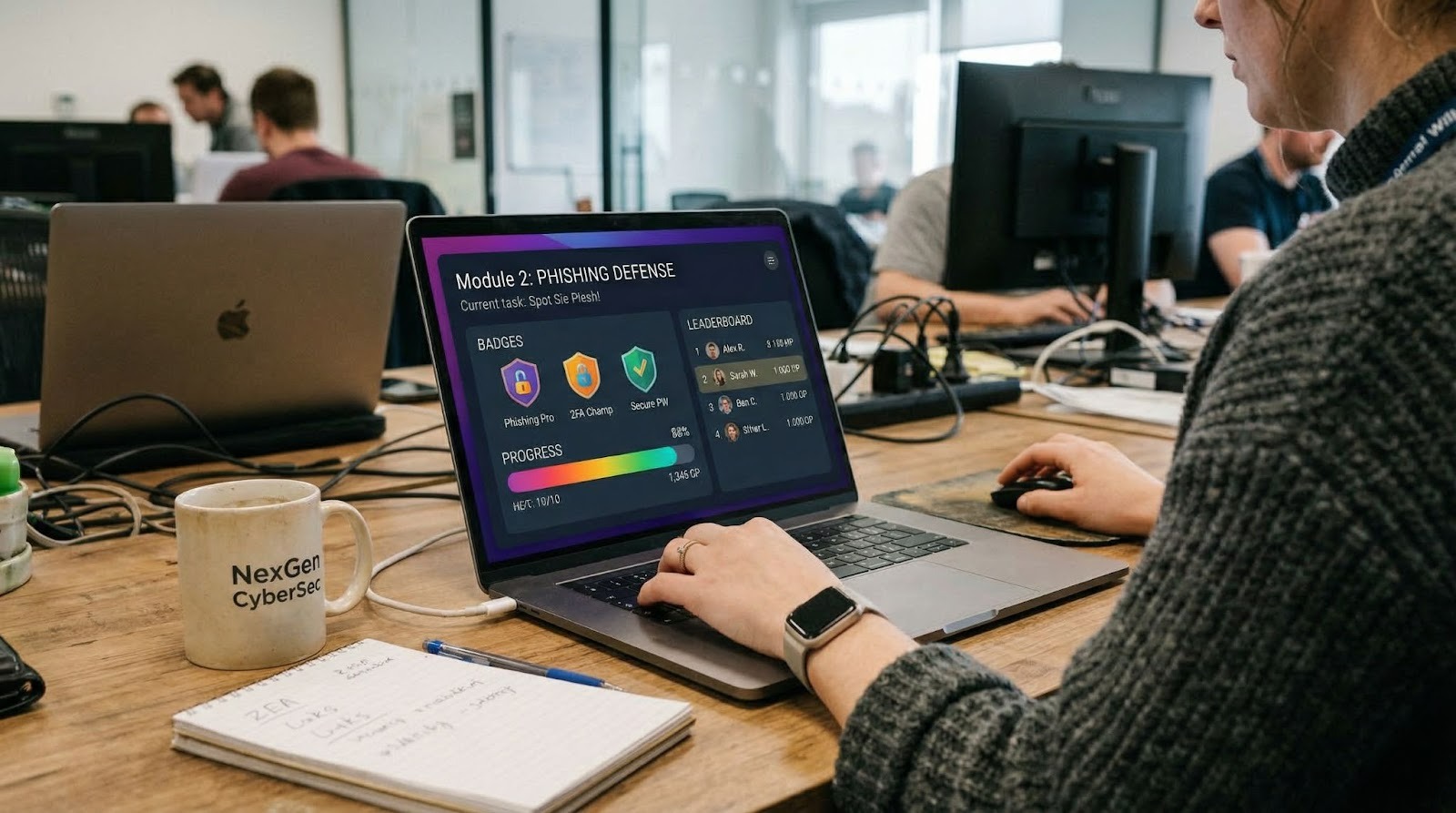
Retention depends on frequency, but also on whether employees are actually paying attention. That’s where gamified microlearning plays a real role. Platforms built around rewards, badges, and progress tracking tap into the same motivation systems that keep people engaged with apps and games. Applied to security training, that drives consistent participation rather than checkbox compliance.
Drip7 was built with this in mind. The platform delivers security lessons in short daily sessions, using gamification to make training rewarding rather than tedious. Real-time skill tracking shows where employees are strong and where they need more support, while AI-driven personalization adjusts content to fit individual roles.
Building a Security Culture That Lasts
The goal of microlearning isn’t just compliance. It’s to build real security habits that make employees less likely to fall for a phishing email, a suspicious phone call, or a social engineering attempt. That kind of awareness doesn’t come from one annual session. It comes from consistent, well-timed exposure to content employees can actually absorb and use.
Organizations that commit to regular micro-training tend to see results over time: fewer incidents, stronger compliance outcomes, and a workforce that treats security as a shared responsibility rather than an annual formality.
Ready to build a team that actually retains what it learns? Explore what Drip7 can do for your organization, from daily microlearning drips to real-time skill tracking and AI-driven personalization.
Conclusion
Security training works best when it reflects how people actually learn. Short, frequent, relevant lessons reinforced over time are far more effective than long annual sessions employees forget before the week is out. Microlearning closes the gap between training and real-world behavior, and for organizations serious about protecting their people and data, that shift makes a lasting difference.