


Most employees don't ignore security training because they don't care about safety. They ignore it because the training itself makes it nearly impossible to stay engaged. Long courses crammed into a single annual session overwhelm people with information they'll forget within days. The format is the problem, not the people. When organizations switch to short, focused lessons, the difference in retention and behavior is immediate and measurable.
Key Takeaways
- Long security courses overwhelm employees and lead to poor knowledge retention.
- Microlearning delivers information in short, focused bursts that are easier to absorb and remember.
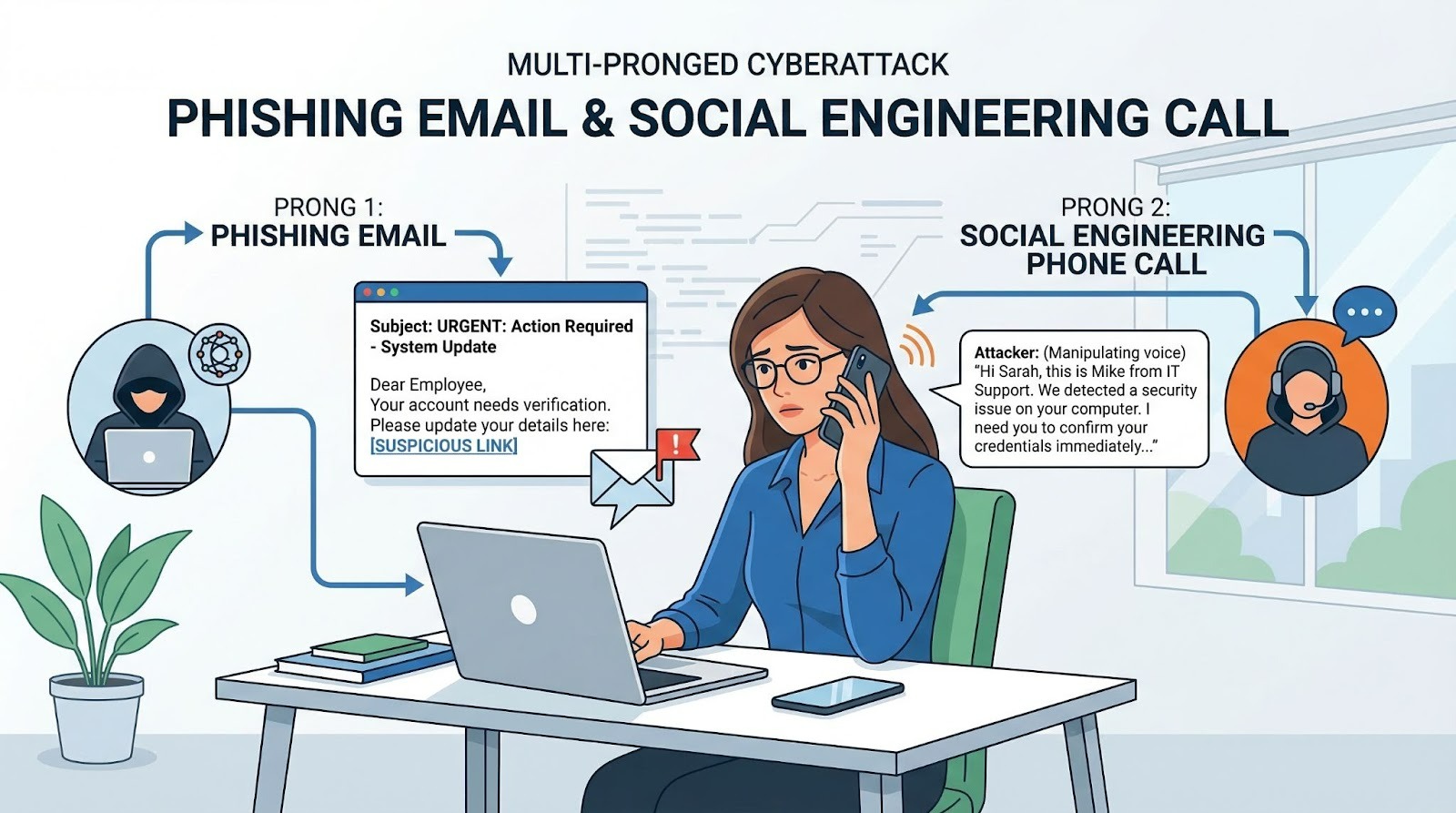
- Cybercriminals often combine phishing emails with phone calls to bypass employee defenses.
- Gamification in security training increases engagement and helps reinforce key behaviors over time.
- Consistent, bite-sized training is more effective than a single annual course at changing long-term behavior.
The Real Problem With Long Security Courses
Sitting through a two-hour compliance module isn't just boring. It's counterproductive. Research on learning behavior consistently shows that the human brain can only hold so much new information at once before it starts to disengage. When employees are forced through a long course with no breaks, no interaction, and no immediate way to apply what they're learning, most of the content disappears within days. The forgetting curve is real, and traditional training does almost nothing to fight it.
There's also a motivation issue. When training feels like a checkbox rather than something useful, employees mentally check out before it even begins. Compliance training has a reputation for being dry, and if the format never changes, that reputation sticks. Companies end up spending money on training that doesn't actually change behavior, which is the only outcome that matters when the goal is reducing risk.
What Makes Microlearning Different
Microlearning breaks training into bite-sized lessons that employees can complete in minutes rather than hours. Instead of scheduling one massive training block, organizations deliver small pieces of relevant, focused content on a regular basis. This approach respects employees' time and matches how people actually consume information in their daily lives. It's the difference between reading one long article once a year and getting a short, useful tip a few times a week.
That consistent drip of information does something the annual course never could: it keeps security top of mind. Employees don't need to memorize a year's worth of policies in one sitting. They absorb one concept at a time, and over time those small pieces add up to a much stronger security posture. Repetition builds habits, and habits are what actually protect organizations from threats.

Why the Brain Responds Better to Short Content
The science is straightforward. Humans process and retain information better when it arrives in small chunks, with time to reflect and apply each concept before the next one arrives. Studies on knowledge retention confirm that spaced repetition, where you revisit material over time rather than all at once, dramatically improves how much people actually remember. Short lessons naturally support this pattern in a way that marathon training sessions never can.
This matters a lot in cybersecurity, where threats evolve fast and the cost of a mistake is high. An employee who completed a phishing lesson six months ago and never revisited it is vulnerable. One who gets a quick refresher every few weeks is far more likely to pause before clicking something suspicious. That pause is exactly what good security training is designed to create.
Why Microlearning Is the Future of Cybersecurity Training
Criminals Do a Multi-Pronged Approach: Phone Call as Well as Email
One of the most overlooked threats in security awareness training is the combination attack. Cybercriminals rarely rely on a single method to deceive someone. A common tactic is to send a phishing email first, then follow up with a phone call pretending to be IT support or a bank representative. This two-step approach exploits the fact that most employees are trained to spot obvious email scams but aren't prepared for a convincing voice that reinforces the deception.
Poor employee engagement with training leaves people especially vulnerable to these layered attacks. When training only covers one threat type at a time, employees develop blind spots. The phone call confirms what the email suggested, and the employee acts. Effective training needs to address the full range of methods, including voice phishing, SMS scams, and the way these tactics often work together in coordinated campaigns.
The Gamification Factor
One reason gamified microlearning works so well is that it changes the emotional experience of training entirely. Points, badges, and progress tracking turn a passive activity into something employees actually want to engage with. When there's a reward for completing a lesson or a leaderboard that shows how the team is performing, people pay attention. They also return voluntarily, which is something no mandatory two-hour session has managed to achieve.
Gamification also creates accountability without pressure. When employees can track their own progress and see their skills developing over time, they tend to take ownership of their learning. It shifts the dynamic from 'I have to do this' to 'I want to stay sharp,' and that shift is what makes training stick long after the lesson ends.

Making It Stick: Engagement That Drives Real Change
Building a cyber-aware culture takes more than good intentions. It takes consistency, relevance, and a format that employees are actually willing to engage with. Long courses check none of those boxes. Microlearning checks all of them. Habits form through repetition, and the goal of security training isn't knowledge transfer in isolation. It's long-term behavior change, and that only happens with regular, manageable exposure.
Related: Building a Cyber Aware Culture: Why Training Once a Year Isn't Enough
Organizations using this approach consistently report a higher engagement rate compared to traditional formats. Higher engagement leads directly to better security outcomes, including fewer phishing clicks, faster incident reporting, and stronger overall compliance. The format matters as much as the content, and when both are done right, employees stop treating training as an obstacle and start treating it as part of how they work.
If you're ready to replace outdated training with a platform that actually engages your team, start building smarter security habits with Drip7.
Microlearning Works Because It Fits the Way People Actually Learn
The evidence is clear. Long security courses don't fail because employees are careless. They fail because the format doesn't match how people learn. Microlearning solves this by delivering focused, relevant content at a pace that works with the brain rather than against it. When training is short, consistent, and engaging, employees absorb more, remember more, and act on what they've learned. That's the shift every organization needs to make.