
.webp)

Tax season (January-April) is prime time for cybercriminals. Phishing attacks spike dramatically as hackers exploit the rush, stress, and high financial activity. This period creates a perfect storm: people expect urgent tax emails, click links for forms/refunds, and share sensitive data. Attackers easily impersonate trusted entities, blend in, and steal information without immediate detection.
Key Takeaways
- Tax season generates a predictable surge in urgent emails and financial activity that cybercriminals exploit through phishing and impersonation tactics.
- Hackers target taxpayers and businesses by posing as the IRS, payroll providers, or tax preparation services to steal credentials and sensitive data.
- Organizations can reduce risk by implementing ongoing security awareness training and simulated phishing exercises before and during tax season.
- Real-time verification of suspicious tax-related communications and multi-factor authentication are critical defenses against identity theft and fraud.
- Educating employees about recognizing fraudulent tax emails helps prevent data breaches that can lead to regulatory penalties and financial loss.
Tax Season Creates Predictable Urgency
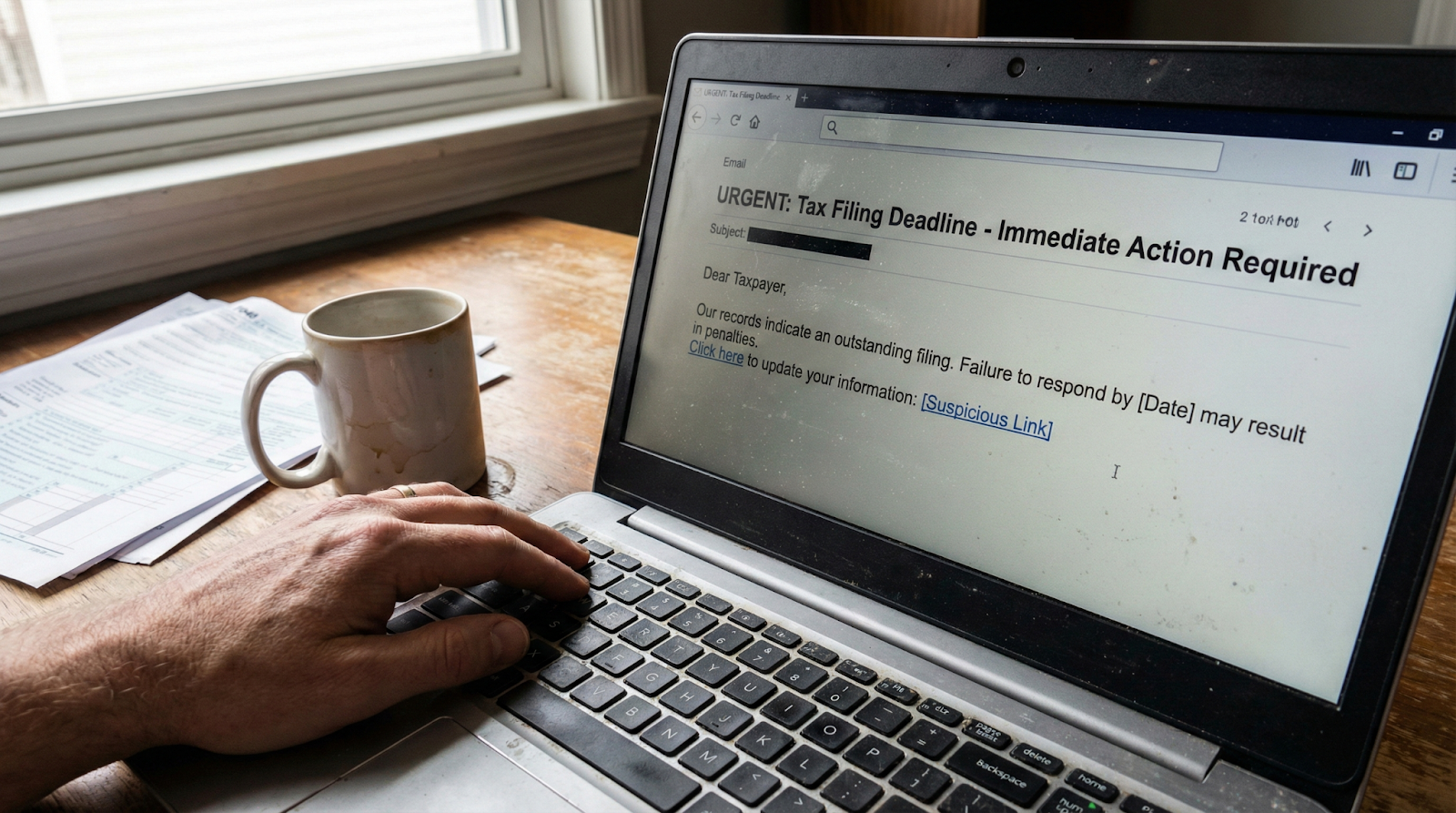
Urgency is one of the most effective psychological triggers hackers use, and tax season delivers it on a silver platter. Deadlines are firm, penalties are real, and people feel genuine pressure to act quickly. This makes it far easier for attackers to send convincing emails that prompt immediate action without much scrutiny.
During this time, tax season phishing scams targeting taxpayers become more sophisticated. Emails impersonating the IRS, tax preparers, or payroll systems blend seamlessly into inboxes already flooded with legitimate tax correspondence. Employees and individuals alike are more likely to click on links, download attachments, or share sensitive information when they believe it's time-sensitive and related to filing requirements.
Whale Phishing: Understanding CEO Fraud in Cybersecurity
People Expect Tax-Related Emails
Tax season encourages behaviors hackers exploit: link-clicking, form downloading, and responding to unexpected requests. The volume of legitimate W-2 and filing emails makes distinguishing real from fake communications difficult. Attackers leverage this with urgent, familiar-sounding emails that mimic trusted brands, using official logos and timing.
This is why hackers target tax-related emails and refunds, because the context already exists for people to interact with these types of messages without suspicion. The attacker doesn't have to create trust from scratch; tax season does that work for them.
High-Value Data Is Actively Shared
Tax season is a prime time for cybercriminals because people share sensitive data, SSNs, income, bank details, that hackers use for identity theft and fraud. People are less cautious during this period, which hackers exploit with phishing emails requesting verification, promising quick refunds for account details, or directing victims to fake identity portals. Many of these scams involve common tax identity theft and phishing tactics that rely on the victim believing the request is part of normal tax processing.
Businesses Face Compounding Risks
Tax season makes both individuals and businesses vulnerable, with companies facing higher risks due to the volume of financial and employee data handled by payroll, finance, and HR teams.
A key threat is W-2 phishing, where hackers impersonate executives to trick HR or payroll staff into sending employee tax forms, capitalizing on the busy filing period to bypass scrutiny. Organizations that lack ongoing fully managed security awareness training are especially vulnerable to these tactics, as employees may not recognize the warning signs of a spoofed email or fraudulent request.
Top 7 Cybersecurity Mistakes Employees Make Without Knowing
Prevention Requires Proactive Training
The best defense against tax season phishing attacks isn't just better technology or stricter email filters. It's preparing people to recognize and respond to threats before they cause damage. This means training employees to verify the legitimacy of tax-related requests, double-check sender addresses, and report suspicious emails immediately rather than ignoring them or clicking through out of habit.
Effective preparation involves running phishing attack simulations and training throughout the year, not just when tax season begins. Simulated attacks that mimic real-world tax scams help employees practice identifying red flags in a controlled environment. Over time, this builds the reflexive awareness needed to spot fraudulent emails even when they're well-crafted and arrive during high-stress periods.

Measuring Awareness Matters
Training alone isn't enough if you can't measure whether it's working. Organizations need to track how employees respond to simulated phishing attempts, monitor click rates on suspicious emails, and identify knowledge gaps that need to be addressed. Measuring the effectiveness of cybersecurity awareness programs provides the data needed to refine training, target high-risk groups, and demonstrate improvement over time.
This approach shifts security from a one-time event to an ongoing process. Instead of relying on annual training sessions that employees forget by the time tax season arrives, organizations can deliver consistent, bite-sized lessons that reinforce good habits and keep security top of mind. When employees are regularly exposed to realistic scenarios, they're far less likely to fall for actual attacks when they occur.
If your team isn't prepared for the surge in tax-related phishing attacks, now is the time to act. Strengthen your defenses with phishing attack simulations and training that prepare employees to recognize and respond to threats before they escalate.
Conclusion
Tax season will always be a high-risk period for cyberattacks because it combines urgency, familiarity, and the widespread exchange of sensitive data. Hackers love this time of year because it makes their job easier, but organizations that invest in proactive training and continuous awareness can significantly reduce their exposure.
The key is treating cybersecurity as an ongoing discipline rather than a seasonal concern. By building a culture where employees are trained, tested, and equipped to recognize threats year-round, businesses can turn tax season from a vulnerability into an opportunity to demonstrate resilience and preparedness.