


Cybersecurity threats aren't slowing down, and neither should your training. The old approach of cramming employees into a conference room once a year for a four-hour session just doesn't cut it anymore. People forget most of what they learn within days, and attackers know this. They count on employees clicking suspicious links or reusing weak passwords because the training happened too long ago to matter. The fastest way employees learn cybersecurity today comes down to one thing: consistent, bite-sized lessons that fit into their actual workflow instead of disrupting it.
Key Takeaways
- Microlearning delivers short, focused lessons that employees can complete in minutes without disrupting their workday.
- Spaced repetition helps information stick by reinforcing concepts over time rather than overwhelming learners all at once.
- Gamification elements like badges and rewards keep employees motivated to complete training consistently.
- Mobile-friendly platforms allow team members to train from anywhere, making compliance easier for remote and hybrid teams.
- Real-world simulations test employees in safe environments before actual threats reach their inboxes.
Why Traditional Training Falls Short
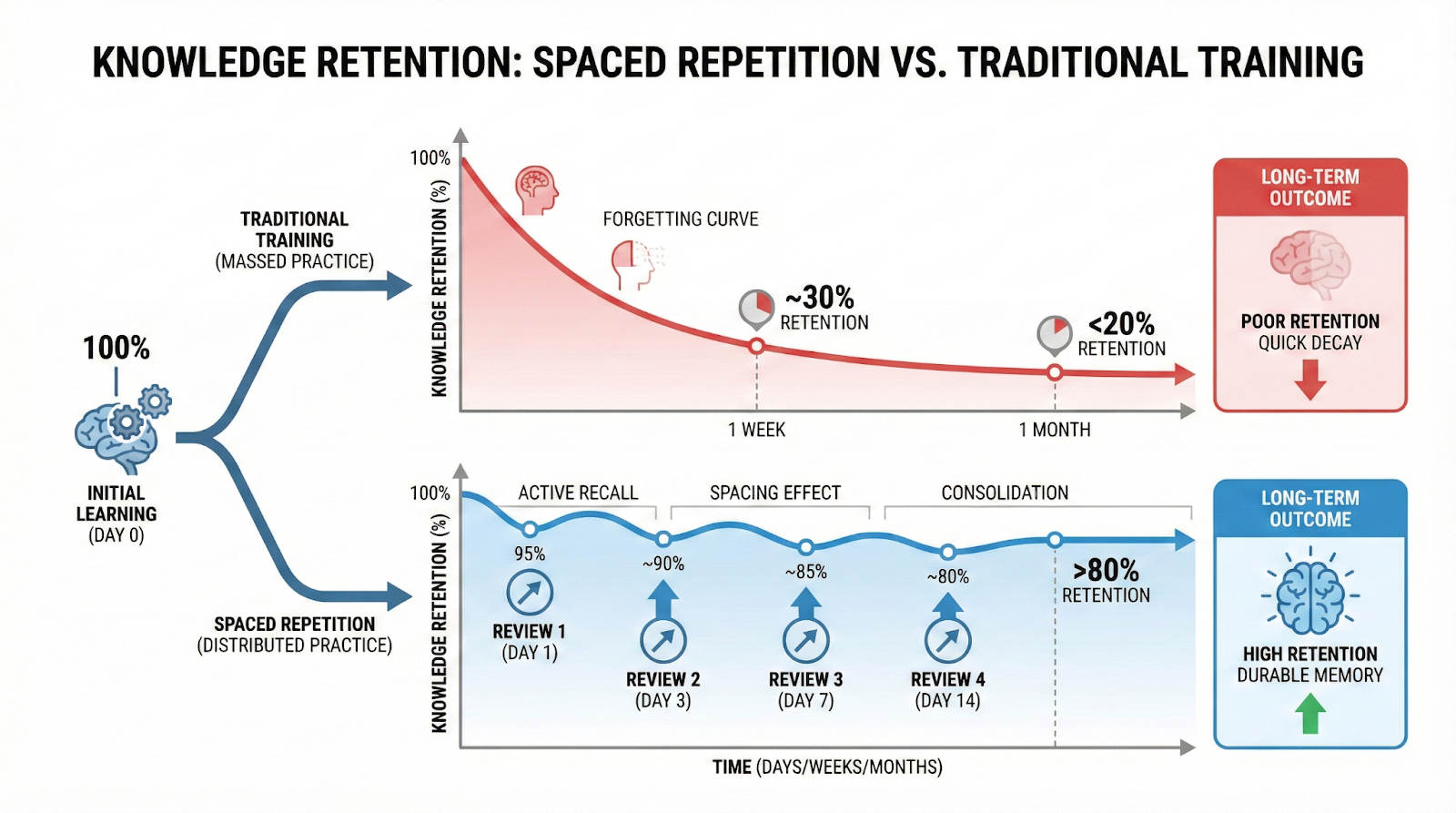
Annual cybersecurity training sessions have been the default for decades, but they create a false sense of security. Employees sit through lengthy presentations, check a box, and move on. Within a week, most of what they learned fades. Research on adult learning principles and retention shows that adults need practical, relevant content delivered in manageable chunks to retain information effectively.
The problem isn't that employees don't care about security. It's that the training format works against how the brain actually learns. Long sessions lead to cognitive overload, and without reinforcement, knowledge decays rapidly. Meanwhile, cybercriminals update their tactics constantly, making last year's training obsolete before the next session even happens.
Building a Cyber-aware Culture Why Training Once a Year Isn't Enough
The Science Behind Faster Learning
The brain doesn't absorb information in marathon sessions. It processes and stores knowledge through repetition over time, which is why spaced repetition learning boosts retention far better than cramming. When employees encounter the same concept multiple times across days or weeks, it moves from short-term to long-term memory. This isn't new science, but it's finally being applied to workplace training in meaningful ways.
Studies on microlearning effectiveness in corporate training consistently show higher completion rates and better knowledge transfer compared to traditional methods. Employees actually finish the training because it doesn't feel like a burden. Five minutes between meetings is manageable. Four hours blocked off the calendar isn't.
What Modern Cybersecurity Training Looks Like
Today's most effective programs share a few key characteristics that set them apart from outdated approaches. Understanding what makes them work can help organizations choose the right solution for their teams.
1. Bite-Sized Lessons
Each lesson takes just a few minutes to complete, covering one specific concept like recognizing phishing emails or creating strong passwords. This focused approach prevents information overload and makes training feel achievable rather than overwhelming.
2. Gamification and Rewards
Badges, leaderboards, and point systems tap into natural motivation. Employees compete with themselves and their peers, turning what used to be a chore into something they actually want to complete. Real-time skill tracking shows progress, which keeps momentum going.
3. Mobile Accessibility
The ability to access mobile cybersecurity training anytime anywhere matters more than ever with remote and hybrid workforces. Training shouldn't require employees to be at their desks. Whether they're on a lunch break or waiting for a meeting to start, learning can happen on any device.
4. Real-World Simulations
Theory only goes so far. Platforms that include phishing attack simulations training test employees in realistic scenarios without actual consequences. When someone clicks a simulated phishing link, they get immediate feedback and additional training. It's a safe way to build real skills before threats hit their inbox.
Top 5 Online Cyber Security Training Topics for Employees
Making Training Stick
The concept of the drip method comes from educational research showing that people need about seven exposures to new information before it truly sticks. Instead of flooding employees with everything at once, effective platforms deliver consistent, small doses of training over time. This approach aligns with how impactful is interactive cybersecurity training when it engages learners actively rather than passively.

Personalization also plays a role. AI-driven systems can adapt to individual learning patterns, serving up content based on where someone struggles or excels. Instead of a one-size-fits-all curriculum, employees get targeted training that addresses their specific gaps. This means faster improvement and more efficient use of training time.
The Business Case for Better Training
Beyond reducing breach risk, modern training platforms offer clear benefits for organizations of all sizes. Compliance requirements become easier to meet when training happens continuously rather than scrambling before audit season. Managers gain visibility into team progress through real-time dashboards, and employee satisfaction improves when training respects their time.
The cost of a security incident far exceeds the investment in proper training. Organizations that adopt microlearning approaches see measurable reductions in successful phishing attempts because their teams stay sharp year-round.
Take the Next Step
If your organization is ready to move beyond outdated training methods, now is the time to explore what modern cybersecurity awareness programs can do. Get started with fully managed security awareness training that delivers consistent results without adding to your team's workload.
Building a Stronger Security Culture
The fastest way employees learn cybersecurity isn't through longer sessions or more detailed presentations. It's through consistent, engaging, bite-sized training that fits into their daily routine. When security awareness becomes a habit rather than an annual event, organizations build resilient teams that can recognize and respond to threats before they cause damage. The technology exists to make this happen, and the results speak for themselves.