

Cybersecurity threats aren’t slowing down. If anything, attackers are getting more creative, more patient, and more strategic, targeting employees through multiple channels at once. Traditional annual training sessions were never enough to match that pace, and now, with AI reshaping how attacks are built, the tools we use to defend against them need to evolve too. AI is changing employee cybersecurity training in real, practical ways, and the results speak for themselves when employees actually remember what they learned.
Key Takeaways
- AI personalizes cybersecurity training by adapting content to each employee’s skill gaps and behavior patterns.
- Modern attackers use multi-pronged tactics, combining phishing emails with follow-up phone calls to manipulate employees.
- Gamified microlearning delivers short, engaging lessons that build long-term knowledge retention through repetition.
- AI-powered simulations expose employees to realistic threat scenarios before real attacks occur.
- Continuous training outperforms annual sessions by reinforcing security habits through consistent, bite-sized content.
Why Annual Training Just Doesn’t Cut It Anymore
Think about the last time your team sat through a one-hour compliance video. Most of it was forgotten within days. Research consistently shows that retention drops sharply after a single training event, no matter how good the content is. Security threats, on the other hand, evolve week by week. New phishing kits, social engineering scripts, and attack vectors emerge constantly, making outdated training a real liability.
Employees aren’t the weakest link because they don’t care. They’re vulnerable because they’re not trained often enough, or in ways that actually stick. A one-size-fits-all session that happens once a year leaves massive gaps, and attackers know exactly how to exploit them. That’s the core problem AI-driven training is solving.
The Rise of AI Threats on Cybersecurity
How AI Personalizes the Training Experience
Not every employee faces the same risk level. A payroll manager is a more likely target for business email compromise than a warehouse worker, and training should reflect that. AI-driven personalized learning analyzes an individual’s role, past responses to simulations, and knowledge gaps to build a training path that actually makes sense for that person.
This isn’t just about difficulty levels. It’s about serving the right content at the right time. If someone struggles with spotting spear phishing attempts but breezes through password hygiene questions, the system adjusts. Personalized learning paths mean employees spend less time on material they already know and more time building the specific awareness they lack.
When Criminals Use Both the Phone and the Inbox
One of the most underestimated threats today is the multi-pronged attack. A criminal doesn’t just send a phishing email and hope for the best. They layer their tactics deliberately, using each channel to reinforce the other.
A common pattern: an employee gets an email appearing to be from IT or a trusted vendor, and then, within hours, receives a follow-up phone call from someone claiming to represent the same organization, urging them to act fast, verify a password, or click a link.
This combination works because each interaction lends the other credibility. The email creates urgency. The phone call removes doubt. Together, they create a scenario most employees aren’t prepared to challenge. The problem is that training has historically focused on email-only awareness, leaving employees blind to how voice and digital channels work together in a coordinated social engineering attack.
Adaptive simulations that replicate these multi-channel scenarios give employees the mental framework to pause, question, and verify before acting. It’s not about making them suspicious of everything. It’s about building the awareness to recognize a pattern before it turns into a breach.
Simulations That Stay Current With Real Threats
Static training can’t keep up with dynamic threats. That’s where real-time threat adaptation gives AI-powered platforms a real edge. These systems pull in current threat intelligence and update simulation content to reflect what attackers are actually doing right now, not what was in last year’s compliance module.
Phishing attack simulations are particularly powerful when they’re built on current, realistic tactics. A simulation using a convincing, up-to-date lure is far more valuable than a generic test that any seasoned employee can spot from a mile away. When employees encounter realistic attempts in a safe environment, their confidence in identifying the real thing grows over time.

Making Training Stick With Gamification and Microlearning
Long sessions lose people. Short, frequent lessons work. The idea behind a gamified microlearning platform is grounded in behavioral science. Earning points, unlocking badges, and seeing progress on a leaderboard taps into the same motivation loops that make games engaging. When training feels like a daily habit instead of a chore, participation increases and knowledge actually sticks.
Drip7 delivers training through short lessons employees can complete in just a few minutes a day, building awareness through consistent exposure rather than one-time overload. That steady repetition is what creates durable knowledge. A platform built on that rhythm does far more for long-term security than any single annual session ever could.
What This Means for Security Teams
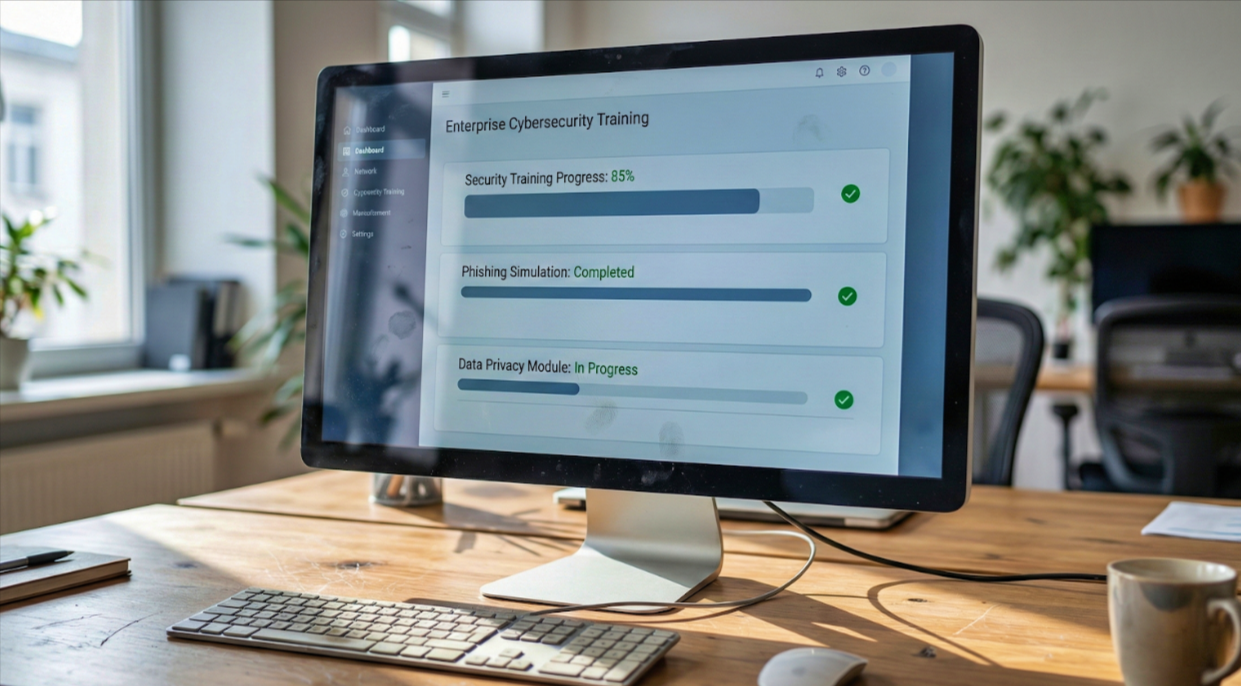
AI-powered training doesn’t just benefit employees. It gives security teams something they’ve long needed: visibility. Real-time dashboards, behavior analytics, and detailed reporting let managers see exactly which teams are improving, who needs more support, and where organizational risk is concentrated at any given time.
That data becomes the foundation for smarter security decisions. Instead of guessing whether training is actually working, managers can measure it with precision and act on what they find. Combining consistent delivery with actionable insight is what separates modern, effective programs from the outdated ones they replace.
Ready to build a team genuinely prepared for today’s threats? Start your free trial with Drip7 and see how AI-powered training changes the way your employees respond to risk.
Bringing It All Together
Cybersecurity training isn’t just about checking a compliance box. It’s about building a workforce that can recognize threats, resist manipulation, and respond correctly when something feels off. AI makes that possible at scale, with a level of precision that manual training programs simply can’t replicate.
Attackers are getting smarter, and they’re using every channel available to reach your employees. The organizations that respond with training that’s equally adaptive, personalized, and consistent will be far better positioned when the next wave of attacks hits.